Every leak in your business. In dollars.
The assessment is the product, not the pitch.
We map how the business actually runs, put a dollar figure on every leak — mis-priced bids, unbilled change orders, estimates that never got out the door — and hand you a ranked blueprint of exactly where AI pays you back: what to build first, what to build later, and what to leave alone. The blueprint is yours to keep, even if we never build a thing. And if the math doesn't work for your operation, we'll tell you that in plain English.
Book Your Free 30-Minute AI Assessment CallWe'll tell you straight whether it's worth it for your operation — including "not yet." 30 minutes instead of $30,000. Not ready for the assessment? Start small.
The AI-First Framework
You can't become an AI-first company overnight, or in one step. Here's the process that takes you from where you are today to an AI-first company: Map, Wire, Automate, Scale.
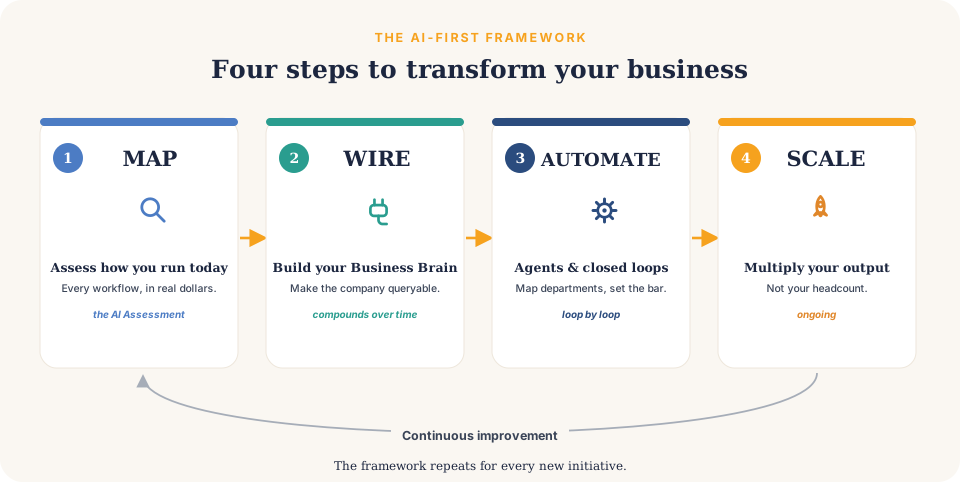
The goal is to map your business to how it actually runs — and put a dollar figure on every leak.
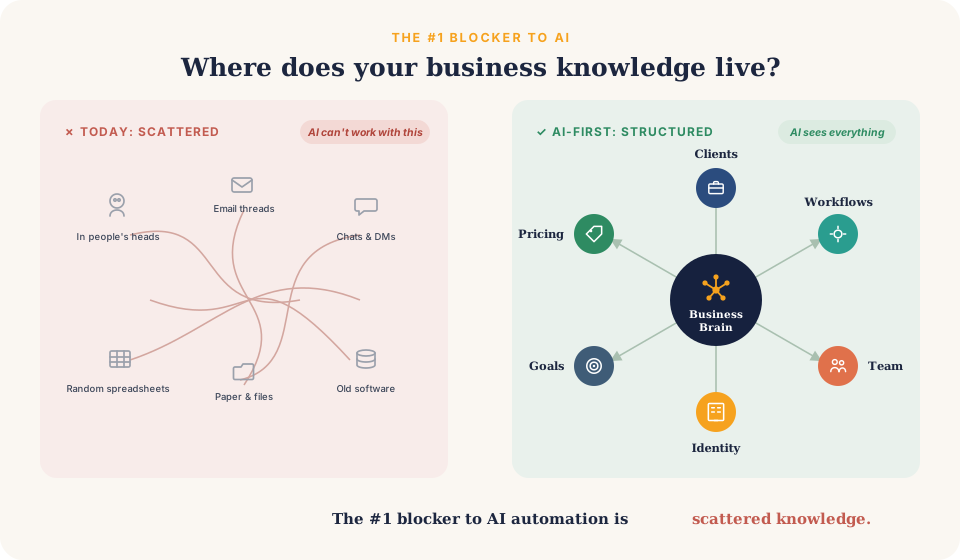
It's not a one-and-done project: the same four steps repeat for every new corner of the business you point them at — and the AI Opportunity Assessment is Step 1, Map — the blueprint that tells you what the other three are worth before you spend a dollar building.
What the assessment is — in plain English
The Assessment creates a blueprint — a working analysis of your existing operation, built from structured interviews with the people who actually run it. It then maps a path towards being an AI-First Contractor.
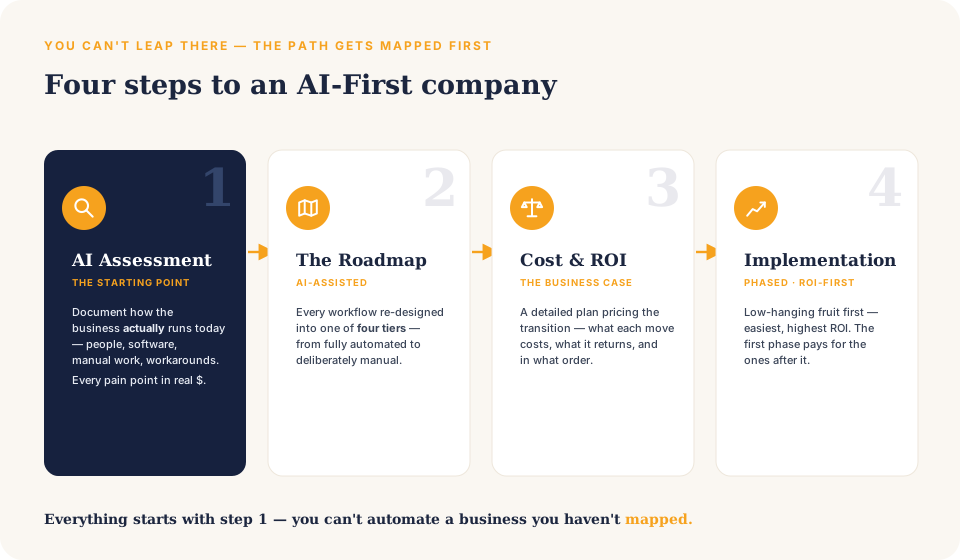
We're not hunting for places to sprinkle AI. We hunt for the leaks, bottlenecks, and time-sinks standing between your company and its goals — then, and only then, we overlay AI where it actually solves something. Plenty of what we find turns out to be nine parts process fix, one part AI. We'll say so. We're mapping outcomes, not selling technology.
We interview the people who actually run each function — estimating, scheduling, the office, the field — and trace how work really moves: how a lead becomes a bid, a bid becomes a job, a change becomes (or doesn't become) a billable, and a finished job becomes money in the bank. The interviews run over Zoom — no site disruption, no crew standing around while a consultant wanders the yard. We arrive with 14 years of contractor process knowledge and a standard map of the nine functions every contracting business runs on — so we're not discovering your industry on your dime.
The whole thing is built on the scoreboard that tells the truth about a contracting business: Profit per Employee. Every finding gets a dollar figure or an hours figure attached, ranked by payback. No vision decks. A ledger.
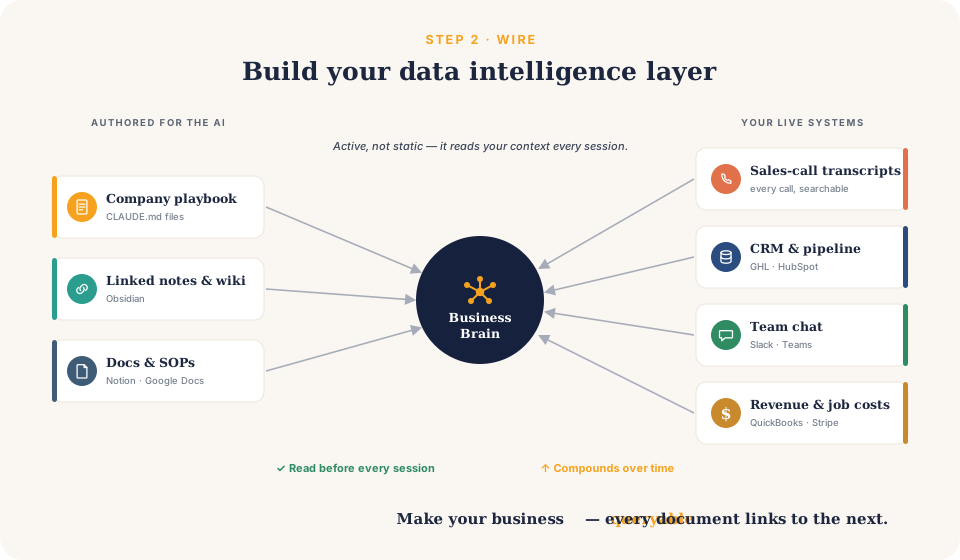
Step 2 — Wire: build your data intelligence layer
Your numbers live in a dozen places — estimating sheets, QuickBooks, the CRM, email, and a good deal of it in your head. Wiring connects the systems you already run into one business brain, so the company becomes something you can ask instead of something you have to go dig through. Nothing gets ripped out, and there's no new platform for your team to learn.
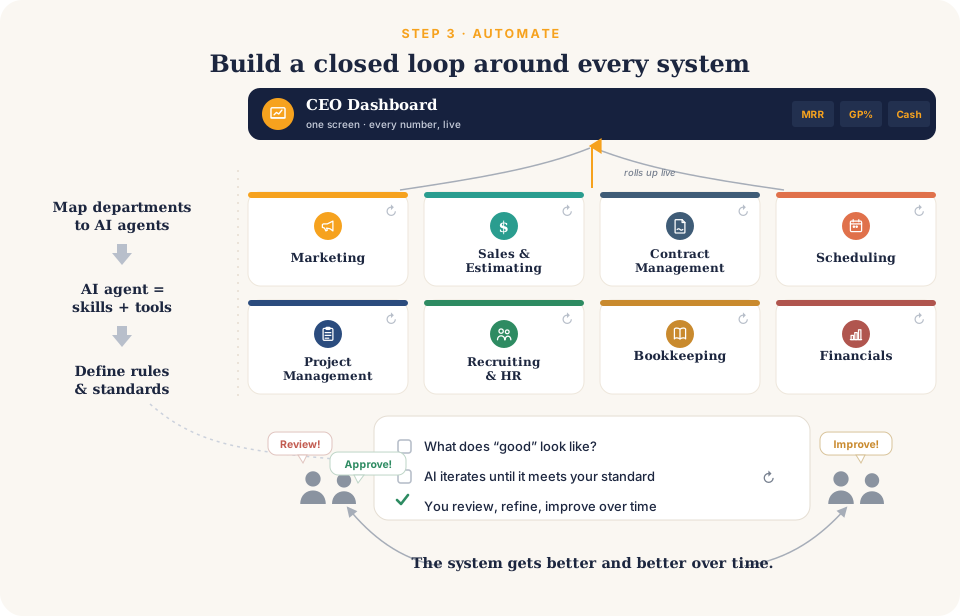
Step 3 — Automate: put a closed loop around every system
Now the work starts moving on its own. We map each department to the agents that handle its busywork — chasing the estimates nobody answered, drafting the change order the day the change happens, staging invoices from job costs — and we set the standard each one is held to before it ever runs. Every agent works to your standards, with your approval on the calls that matter. They own outcomes, not authority. The owner stays the CEO.
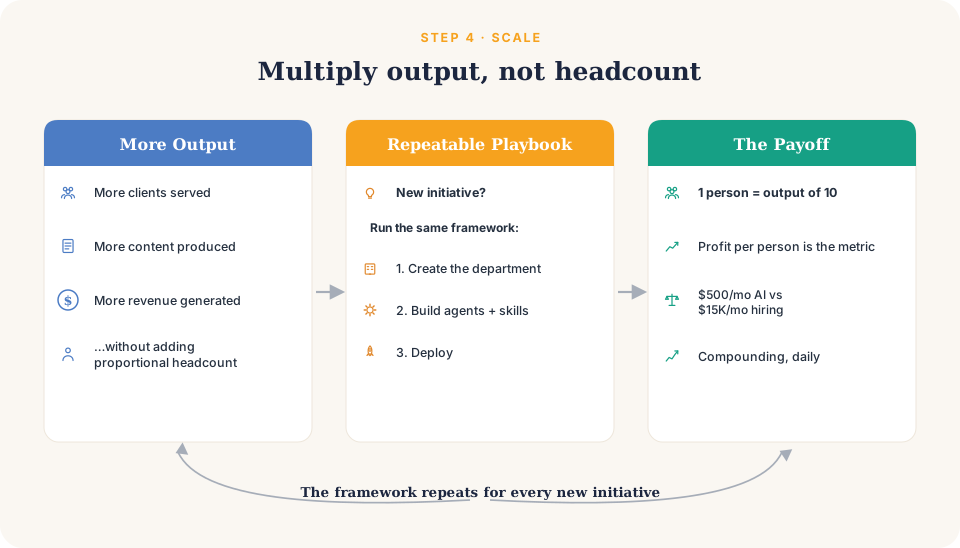
Step 4 — Scale: multiply output, not headcount
With the loops running, more work moves through the same crew — which is the whole point of the scoreboard: profit per employee, not payroll. And because the framework repeats, every new corner of the business you point it at gets the same treatment. A playbook, not a one-off project.
The six deliverables
Every one of these leaves with you. Together they're the blueprint — a living document that keeps working long after the assessment is done.
1. The process map
How your business actually runs, function by function — lead to bid, bid to job, job to final invoice — including the parts that currently live only in your head. Most owners have never seen their own company on one page. This is that page.
2. Every leak, in dollars
Each leak we find gets a number: the margin gap between what the bid said and what the bank account says, the change orders that never became invoices, the estimates that never went out. Not a feelings list — a ledger, in your own figures.
3. The tool & data map
Every system you already run — estimating sheets, contracts, schedules, QuickBooks, calls, email, CRM — what data lives where, and what can talk to what. This is what makes any later build cheap and fast: no second "discovery" engagement, ever.
4. The four-channel workflow redesign
Every workflow in the business, re-sorted into four channels: what should run itself, what needs your sign-off, what stays human with AI handing them the material, and what stays fully human on purpose. Explained in full below.
5. The cost & ROI plan
What each fix costs, what it returns, and the payback ranking — so the decision about what to build (or not build) is a job-cost decision, made with the same math you use to price work. No fix gets recommended without its number.
6. The ranked, phased implementation blueprint
Three phases, low-hanging fruit first: what to build in the first 90 days, what comes next, and what to leave alone. Anyone can execute it — us, your team, or that nephew who's good with AI. Yours to keep either way.
The four-channel redesign — for an owner, not an engineer
Right now, every job in your company runs through one channel: people. The redesign sorts every workflow into the channel where it belongs — that's the decision that moves the scoreboard, and it's a business decision, not a technical one.
Autonomous — it runs itself, and reports to you
Work with clear rules and low stakes: chasing the estimates nobody answered, logging job photos and receipts, keeping the schedule board current. It happens in the background, on your standards, and you see a report — not a to-do.
Human-in-the-Loop — AI does the work, your person approves it
Work where a mistake costs money: the change-order paperwork drafted the moment the change happens, invoices staged from job costs, bid follow-ups written and queued. Nothing goes out the door until your PM or your office manager clicks approve. Your people approve the calls that matter; the AI does the busywork.
AI-Enhanced Human — your person does the work, twice as armed
Work that needs judgment: your estimator still prices the job, but every past bid, actual cost, and supplier quote is in front of them in seconds instead of an afternoon of digging. Same person, same judgment. The goal: make your people 2x–5x more productive — more bids out, priced from real history.
Manual — human on purpose, and stays that way
Walking a client through a hard conversation, negotiating with a sub, shaking hands on a deal, the judgment calls that built your reputation. The redesign protects this channel — it names what should never be automated, so your people's hours go where people are irreplaceable.
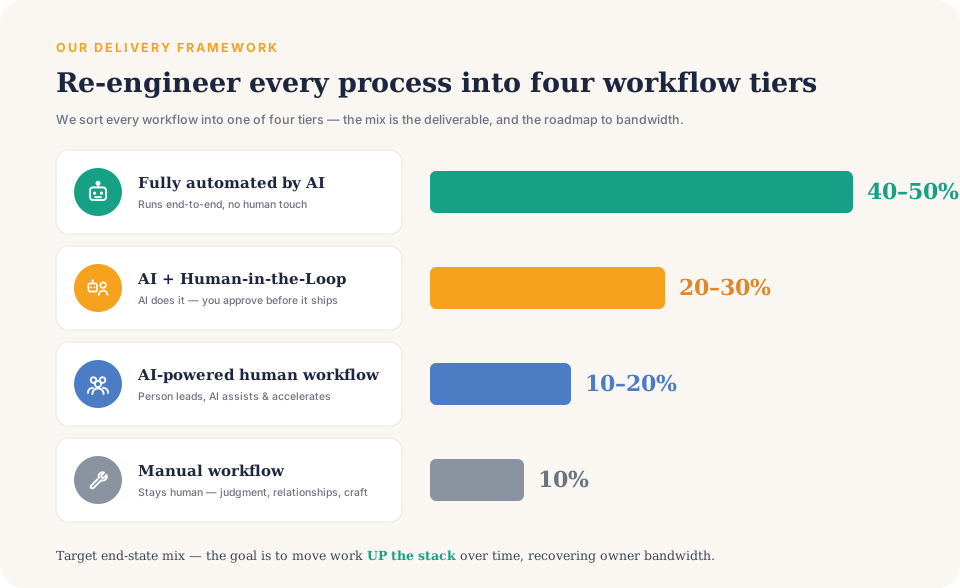
That's the whole idea in one sentence: who decides, what runs itself, what stays human. Agents own outcomes, not authority — and the owner stays the CEO. Always.
What the assessment costs
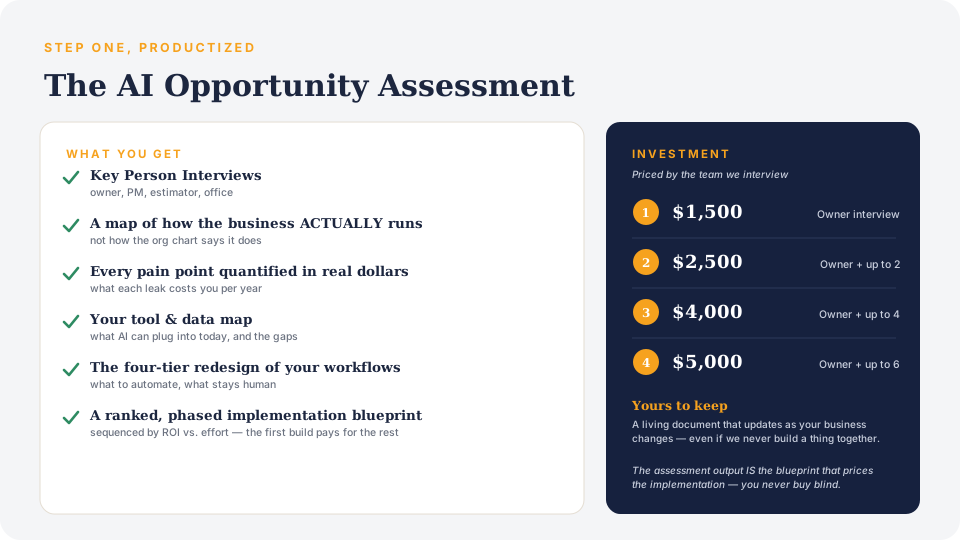
The assessment is $1,500–$5,000, across four published levels. Assessment levels are based on the size of your team — how many functions we're looking to automate by conducting the relevant interviews to create the implementation blueprint. Never your revenue: a bigger top line doesn't cost you more. More functions covered does.
| Level | Price | Who we interview |
|---|---|---|
| Level 1 | $1,500 | Owner interview |
| Level 2 | $2,500 | Owner + up to 2 team members |
| Level 3 | $4,000 | Owner + up to 4 team members |
| Level 4 | $5,000 | Owner + up to 6 team members |
The interviews run over Zoom — no site disruption. And every level ends in the same place: the full blueprint, with every leak in dollars and every fix ranked by payback. You're paying for the outcome, not our hours.
For comparison: generalist AI consultancies commonly quote five figures for a comparable initial assessment (one published example: Dan Cumberland Labs' rate card, $15,000–$30,000) — and cheaper checklist-style diagnostics exist too; compare deliverables, not invoices. We can price it this way because we don't spend your money learning the construction business — we've spent 14 years in it.
And to be candid about the economics: the assessment is priced to cover the work of producing the blueprint, not to profit from it. The build is where we make our money — which is exactly why the blueprint has to be good enough that you'd hire us for it, and why it's yours to keep if you don't.
Now run it against the other side of the ledger. In one contractor's own words:
"The first two years of my self employment I estimate I 'gave away' over $200k in unbilled change orders." — self-employed contractor, r/Contractor — his own estimate of his own losses (industry voice, not a client)
He's not alone: Dodge Construction Network research found 77% of specialty contractors have written off change-order work as bad debt. The expensive thing is the leak, not the map.
And to be straight about what the assessment is not: it's not a discounted foot in the door, and it's not free — a free "assessment" from a software vendor is a sales call with a clipboard. You pay for the analysis, and what we recommend afterward has to earn its keep on its own math.
Yours to keep — even if we never build a thing.
The blueprint doesn't expire when the assessment ends, and it isn't held hostage to hiring us for the build. Take it to your team. Take it to another shop. Take it to your nephew. The process map, the dollar-quantified leaks, the tool and data map, the four-channel redesign, the ROI ranking — all of it works with or without us, because plenty of the fixes are process fixes, not AI at all.
One honest note on what execution takes, so the choice is a real one: a build means wiring into live systems, approval gates, and testing against 90 days of your real jobs — and someone accountable when it breaks the night before a bid deadline. The nephew can run the tools; accountability is the part you're hiring when you hire anyone, us included. Whoever builds it, the blueprint is the map.
If the assessment shows the math doesn't work for your operation, we'll tell you that in plain English and shake your hand — the blueprint is yours to keep either way.
The assessment is the product, not the pitch.
The full ladder, stated plainly
No surprise tiers, nothing quoted blind — the assessment is priced by team size, published right here, and everything after it is scoped in writing from the blueprint. Each rung only makes sense if the one before it proved out.
- Free 30-minute AI Assessment Call — free. A mutual straight answer on whether the assessment is worth it for your operation — including "not yet." You qualify us the way you'd qualify a sub.
- Build your AI Business Brain — CEO Dashboard. The start-small option: we install the brain and connect one of your systems so you see real-time data — email, financials, or CRM — so you watch your business from a Real-Time CEO-level dashboard. Details on the Start Small page.
- AI Opportunity Assessment — $1,500–$5,000, priced by team size (Levels 1–4, published above). The six deliverables, yours to keep.
- Implementation — $15K+, scoped only from the assessment blueprint, never quoted blind; most first phases land $15–25K, because phase one is only the fastest-payback fixes. Three phases, low-hanging fruit first — every number approved before anything starts, and you can stop after any phase. The fixes with the fastest payback fund your confidence in the rest.
- Maintenance retainer — once the build is live: agents kept on your standards, approval gates kept tight, the blueprint kept current as the business changes. Optional, not a lock-in — the build runs without it, and part of every build is training your own people (your office manager, your nephew) so you can take it over. "Why forever?" — it isn't.
Most firms we talk to should stop at the assessment and digest. The blueprint tells you — with numbers — whether implementation is worth it. That's the point of doing it in this order.
The questions contractors ask about the assessment
Straight answers, including the ones that end with "then don't hire us."
Isn't this just an AI audit?
Some call this an AI audit. We don't — audits check compliance; assessments find upside. An audit looks backward to check whether things were done right. The AI Opportunity Assessment looks forward: what every leak is costing you in dollars, and what fixing it is worth, ranked by payback.
And to be plain about the legal words: this is an operational assessment of your workflows and systems — not a financial-statement audit, review, or attestation. We are not a CPA firm, and nobody should sell you "assurance" about AI.
My nephew is good with AI — why would I pay for an assessment?
Great — keep him. He can run the tools. What he can't do is map your whole operation, put a dollar figure on every leak, and rank the fixes by payback — that takes 14 years inside construction businesses, not a ChatGPT subscription. The assessment produces a blueprint anyone can execute, including your nephew — and it's yours to keep even if we never build a thing.
The mechanic is common. The map of your business isn't.
We're not techy. Can we even use what the assessment produces?
Good. Techy isn't the job — profitable is. You don't learn new software; AI wires into what you already run: your estimating sheets, contracts, schedules, QuickBooks, calls, email, CRM. If you can read a job-cost report, you can read our blueprint.
Isn't AI mostly hype? Why pay to find out?
Most of it is — that's why we sell an assessment, not a promise. Here's what isn't hype: when the US Census first measured AI use in 2023, only about 1 in 100 construction firms used it to produce goods or services — the lowest of any industry — and construction still runs at roughly half the national adoption rate (US Census BTOS). Meanwhile, contractors reporting measurable business impact from AI more than doubled in a single year — 17% to 38% (BuildOps, 2026 — a vendor survey, so weigh it accordingly) — while RICS finds 78% of construction organizations have nothing beyond pilots. Both are true at once: the crowd hasn't moved, and the early movers are already collecting.
The truth is, if the assessment shows the math doesn't work for your operation, we'll tell you that too — and the blueprint is yours to keep either way.
Are we too small for an assessment like this?
Backwards — your size is your speed. A big GC needs three committees and eighteen months to change how they estimate. You need a decision and a quarter. At $2M–$20M, that's not a weakness. It's the whole advantage.
Who's on the hook if the AI is wrong?
You are — which is why nothing we recommend acts without standards and approval gates. That's exactly what the four-channel redesign decides, workflow by workflow: what runs itself, what needs a person's sign-off, what stays human. Agents own outcomes, not authority. Your people approve the calls that matter; the AI does the busywork. The owner stays the CEO. Always.
Why not just buy Procore's AI or another tool instead?
A platform can only optimize the workflows that live inside it — it doesn't get the business out of your head. The four-channel redesign is about the business — who decides, what runs itself, what stays human — not any one tool. Point tools bought one at a time is automating the past, one subscription at a time. The assessment tells you which fixes pay back first — before you spend implementation money on any of them.
What if the assessment shows AI isn't worth it for us?
Then we tell you that in plain English and shake your hand — and you keep the blueprint either way. The process map, the dollar-quantified leaks, and the ranked fixes are useful with or without AI; many of the fixes are process fixes. That's the deal: the assessment is the product, not the pitch.
Start with the free 30-minute AI Assessment Call
We'll tell you straight whether it's worth it for your operation — including "not yet" — and we'll re-size the scoreboard math to your revenue and your books, live on the call. If it isn't a fit, you'll know in 30 minutes instead of $30,000 — not after a five-figure generalist consulting engagement.
One honest note on timing: the assessment calendar has limited slots — and the bigger clock isn't ours, it's your market's. Contractors reporting measurable business impact from AI went from 17% to 38% in one year (BuildOps, 2026 — a vendor survey), while RICS still finds 78% of construction organizations have nothing beyond pilots — both are true at once.
Not ready for the assessment? Start small: Build your AI Business Brain — CEO Dashboard. Watch your business in real time.
If the assessment shows the math doesn't work for your operation, we'll tell you that in plain English and shake your hand — the blueprint is yours to keep either way.